
Pickling vs Fermenting: What’s the Real Difference Between Your Favourite Tangy Sides
Pickling and fermenting may look similar on your plate, but they work very differently. Here’s a simple guide to taste, health, and tradition.


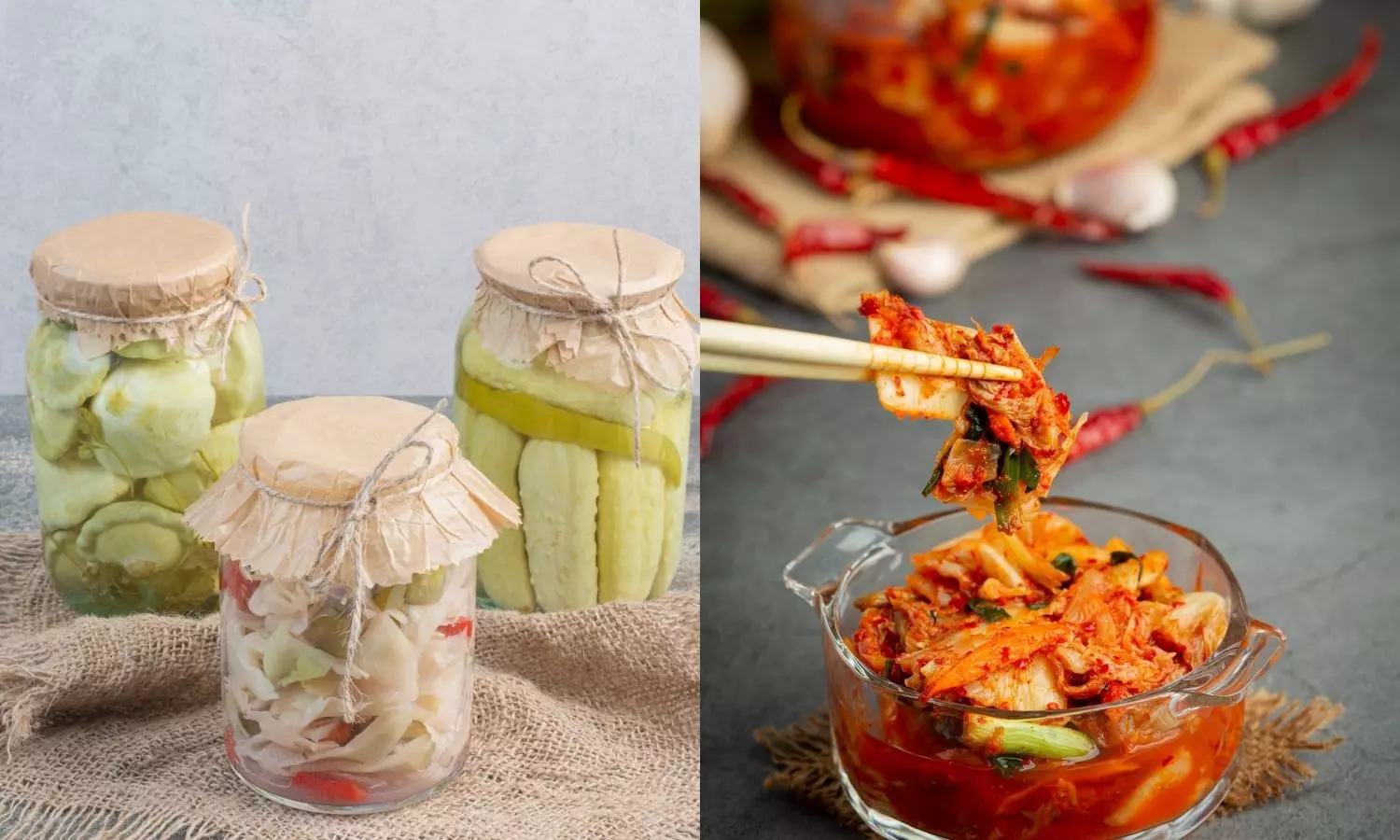
Pickling vs Fermenting: Why Your Favourite Sides Are Not the Same
Many of us love pairing our meals with something tangy on the side. A spoon of pickle with dal chawal, some kimchi with noodles, or a few olives with pasta. It feels incomplete without that punch of flavour. But here is something most of us do not realise. Pickling and fermenting are not the same thing.
And no, by "pickling," we are not talking about our traditional Indian achaar, soaked in oil and spices. We mean proper vinegar-based pickling that you often see in global cuisines.
While many people use these terms interchangeably, there is a clear difference. And since I prepare and enjoy both, let me break it down for you in the simplest way possible. Let us get to it.
What Is Pickling?
Pickling is all about preservation using acid.
In this method, fruits or vegetables are soaked in vinegar, brine, or another acidic liquid. This acid stops harmful bacteria from growing and helps the food last longer.
Think of:
- Cucumber/Gherkin pickles
- Pickled onions (Click here to make some at home!)
- Pickled jalapenos
- Pickled beets, carrots, turmeric, etc.
These are classic examples of pickled foods. The flavour comes mainly from vinegar, salt, sugar, and spices. The process is quick and controlled. In many cases, pickles are ready within a few hours or days.
Key Features of Pickling
- Uses vinegar or an acidic solution
- Does not rely on natural bacteria
- Fast process
- Sharp, sour, and sometimes sweet taste
- Lasts 3-4 weeks (the flavours and texture slowly disintegrate, I don't know about you, but I love my pickles crunchy)
Pickling is perfect when you want instant tang and crunch.
What Is Fermenting?
Fermenting is a natural and slow process. Here, the vegetables are preserved using good bacteria that already exist on their surface. When mixed with salt and water, these bacteria break down sugars and turn them into lactic acid. This acid preserves the food and gives it that deep, complex (umami, we love!) flavour. Fermentation is also gaining popularity as a sustainable way to preserve seasonal produce without electricity or plastic packaging.
Think of:
- Kimchi (Want to make some Kimchi? Click here!)
- Sauerkraut
- Kanji
- Idli and dosa batter
- Kombucha
All these are fermented foods. Fermentation happens over days or weeks. It cannot be rushed. Time and temperature play a big role.
Key Features of Fermenting:
- Uses natural bacteria
- No vinegar needed
- Slow process
- Develops layered, tangy flavours
- Rich in probiotics
- Lasts 3-6 months
Fermentation is where food meets science and patience.
Which One Is Healthier?
This is where many people get curious. Fermented foods usually win in the health department. Because they contain live bacteria, they support gut health, digestion, and immunity. These probiotics help balance our stomach’s microbiome.
Pickled foods, especially vinegar-based ones, usually do not contain live probiotics. However, they are still low-calorie, flavour-packed, and can help control cravings.
So,
For gut health: Choose fermented
For instant flavour: Choose pickled
Both have a place in a balanced diet. While both of them are good for health, keep an eye on salt, sugar, and preservative content, especially the store-bought ones. My mantra- when in doubt, make it at home.
What About Indian Achaars
Now, let us address the elephant in the room.
Our traditional Indian achaar is unique. Some achaars are fermented naturally over time. Others are preserved mainly using oil, salt, and spices. Some modern versions even use vinegar.
So Indian pickles can fall in between pickling and fermenting, depending on how they are made. That is what makes them special and diverse.
Why We Often Confuse the Two
Because on the plate, they look similar. They are both tangy, preserved, served as sides, and full of flavour. But behind the scenes, their journeys are very different.
It is like comparing instant coffee with slow-brewed filter coffee. Both give you caffeine. The experience is not the same.
Should You Include Both in Your Diet
Absolutely. A mix is ideal. Add some fermented foods like kanji, curd, or kimchi for gut health. Keep pickled onions or cucumbers for that extra zing in sandwiches and salads.
Balance is the real secret.
The Bottom Line
Pickling and fermenting may share the same shelf in your fridge, but they belong to different worlds.
Pickling is fast, sharp, and controlled.
Fermenting is slow, natural, and probiotic-rich.
Now, the next time someone says, “Yeh toh bas pickle hi hai,” you will know better. And, maybe even explain it over dinner.



Shreya Mukherjee
Shreya loves a good Harry Potter conversation when she is not busy figuring out the best toppings for Ramen. An avid reader who enjoys all forms of story-telling, you will find her either reading or binge-watching shows. She also loves spending her weekends taking care of her skin while figuring out which restaurant to get a take-out from.