
For The Record
As vinyl spins back into cultural relevance, let's reflect on India’s growing love affair with listening bars, cafés, and rooms where music is finally meant to be heard.


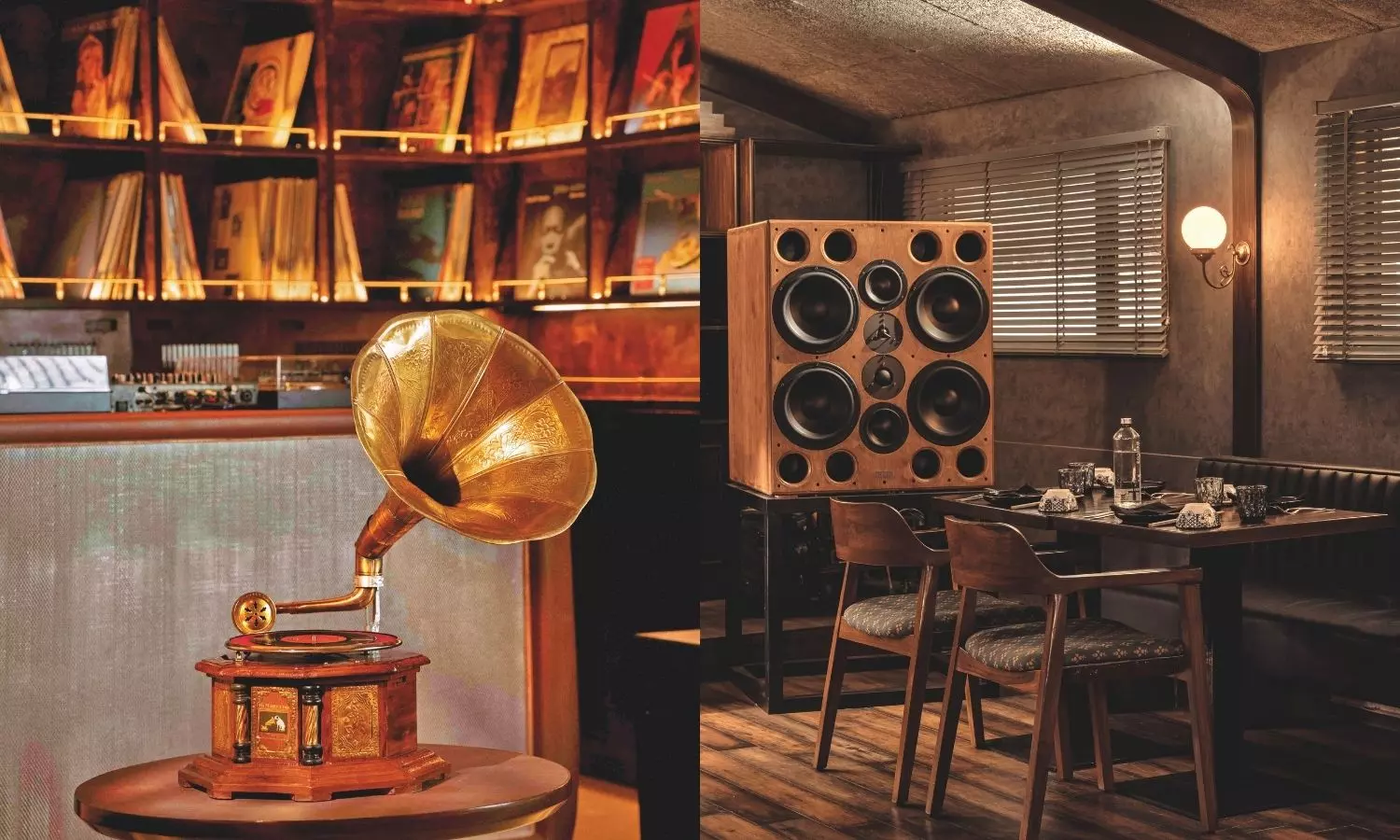
I’ve begun to notice it almost everywhere I go lately—this subtle but unmistakable shift in how we are choosing to listen to music again. Not passively, not as sonic wallpaper piped through bad speakers, but with intention. Across India’s cities, listening bars, listening rooms and vinyl-forward cafés are quietly asserting themselves as cultural spaces, and every time I walk into one, it feels like stepping into a collective pause button.
The idea, of course, isn’t new. Its origins lie thousands of miles away in Japan’s jazz kissas—listening rooms born in the post-war years where vinyl was treated with near- religious reverence. Conversation was minimal, the sound systems immaculate, and the focus absolute. These were places where you went not to be seen, but to hear. That philosophy, carried across decades and continents, feels almost subversive today, in an era shaped by streaming algorithms and endless skipping.
Needle Drop
Perhaps that’s why this moment resonates so deeply with me. Growing up in the 1980s, I remember vinyl as part of domestic life. My father’s record collection wasn’t curated or cool—it was simply there. Large sleeves stacked neatly, the deliberate act of sliding a record out, the gentle crackle before the music settled in. Listening demanded patience. You didn’t shuffle tracks or jump between moods. You committed to a side, sometimes an entire album.
Watching vinyl return now, embraced by a generation that never lived with it, feels less like nostalgia and more like rediscovery. What excites me about India’s listening spaces is how they’ve evolved beyond being purist rooms of silence. They’re social, warm, layered with food, drink and conversation, yet still anchored in sound. In Mumbai’s Kala Ghoda, for instance, The Listening Room at The Dimsum Room blurs the line between dining and listening without diluting either. Music there isn’t background filler—it’s an emotional partner to the meal, curated carefully, played through a system that makes you notice texture, space and even silence. You find yourself slowing down, eating more mindfully, staying longer than planned.
City Beats
Down in Chennai, Vinyl & Brew in Teynampet approaches the same idea through coffee and community. It feels less like a café and more like a cultural living room where generations overlap naturally. Teenagers discovering vinyl for the first time sit alongside older patrons reconnecting with music they once loved, while jazz sessions and listening evenings create an easy, unforced intimacy. It’s comforting, almost reassuring, to see how analogue sound still has the power to pull people together.
Ahmedabad’s Blockheads Vinyl Cafe in Ashok Vatika leans directly into the Japanese listening-bar lineage but gives it a distinctly contemporary Indian expression. Here, vinyl, comfort food and coffee coexist effortlessly. Private turntables at tables, silent-disco headsets and izakaya-inspired plates allow you to choose your level of engagement—deeply personal or openly social. It’s the kind of place where you can lose yourself in a record or discuss liner notes over a burger, and both experiences feel equally valid.
Mumbai’s Baroke near the Grant Road train station, meanwhile, takes a bolder stance. As a vinyl-only listening bar, it restores music to the center of nightlife, refusing to let it dissolve into ambient noise. With a carefully curated collection spanning legends like Jimi Hendrix, Stan Getz, The Doors, George Benson, Bryan Adams and Dave Brubeck, evenings unfold as guided sonic journeys rather than random playlists. A dedicated headphone zone, inspired by Japanese listening rooms, offers moments of introspection amid the social buzz—a reminder that listening can be both communal and deeply personal.
What Makes a Listening Bar?
High-fidelity sound systems, vinyl-first programming, carefully considered acoustics— and music that’s meant to be heard, not skipped.
The turntable and record selection at Vinyl & Brew, Chennai
The ’B’ Side
Beyond these headline spaces, the movement is quietly gaining ground through places like Bengaluru’s Middle Room in Shanti Nagar, Panaji’s For The Record and Idoru in Mumbai’s hip Bandra neighbourhood. Each interprets the listening ethos differently, but all share a common thread: respect for sound, for physical formats, and for the ritual of listening itself.
What I find most compelling is that these aren’t just music spaces. They’re places to eat, drink coffee, sip cocktails, talk, remember. They offer refuge from digital fatigue and constant distraction. Vinyl, with its imperfections and demands, asks something of us—and in return, it gives us presence. As the needle drops and the room settles into sound, it becomes clear that this isn’t merely a trend. It’s a return to listening as an experience, not a backdrop—and one I’m more than happy to sit with, side A to side B.
A quick spin around the globe's most iconic Listening Bars that shaped the culture:
- Jazz Kissa Lion, Tokyo
One of Japan’s oldest jazz kissas, where silence is sacred, and vinyl is revered. - Brilliant Corners, London
A cult listening bar pairing rare records with natural wine and modern small plates. - Public Records, New York City
Part listening room, part restaurant, part cultural institution for audiophiles. - Jassmine, Paris
An intimate hi-fi bar known for its eclectic vinyl programming and serious sound systems. - Bar Shiru, Oakland
A vinyl-only listening bar inspired directly by Japanese jazz kissas.



Raul Dias
An award-winning food, travel and luxury writer, editor and columnist, Raul has over two decades of experience across India’s leading newspapers and magazines. Currently the Editor of Fresh, a food and lifestyle magazine, he lends a refined editorial voice to India's ever-evolving food and lifestyle landscape.