
On Nature’s Term
As India remembers farm-to-table cooking, instead of discovering it, let's reflect on how menus and products adapt to the challenges of seasonality and uncertainty


Any chef who builds a menu around direct, seasonal collaboration with farmers in India signs up for operational uncertainty. Weather shifts, delayed deliveries, inconsistent quantities and fluctuating quality can derail even the best-laid plans. Yet for a growing number of chefs, this volatility is not chaos but creative fuel as it demands audacity to pivot in real time and, at times, rebuild entire menus from scratch.
True farm-to-table goes far beyond marketing rhetoric. Alice Waters of Chez Panisse is often credited with formalising the movement in 1970s California through seasonal, local sourcing. India, however, has long practised deeply rooted traditions of regionality and seasonality. The rupture came post-1990s, when improved cold chains, imported ingredients, and year-round availability replaced harvest-led cooking with predictability.
The modern revival, emerging in the early 2010s, has been driven by independent restaurants, urban farmers, growing sustainability awareness and renewed interest in indigenous produce. In India, this shift is more than a dining trend; it intersects with climate resilience, biodiversity, seed sovereignty and the preservation of regional knowledge. Far from discovering farm-to-table, India is remembering it and reclaiming a food culture that predates industrialisation and reconnecting cuisine with the land that sustains it.
When the Landscape Writes the Menu
Chef Goku based in Chennai offers a pragmatic perspective. While the idea of a fully self-sustained, farm-to-table restaurant is compelling, he believes it is rarely feasible within India’s cities with a fragmented supply landscape. “It is near impossible to have local sources for spices, oil, sugar, and salt in all parts of the country”, he emphasises. Through pop-ups across India, he has witnessed both the promise and the constraints of hyperlocal sourcing. “It is easier to do in certain parts of the country, rather than everywhere”, he says. Foraging, he suggests, is emerging as the movement’s next evolution extending beyond cultivated farms into forests and wild ecosystems. At a recent forest-to-fork pop-up in Rainforest, Athirampally, Kerala, he built a menu entirely around foraged ingredients — ferns that grow wild along riverbeds, seasonal tubers, wild pepper, and queen sago, a Jurassic-era plant whose seeds are traditionally smoked, milled into flour, and eaten long before rice became a staple in the region. “You don’t dictate the menu, the landscape does,” he says. “It challenges my abilities as a chef while presenting guests new flavours.”
Kolkata-based Chef Auroni Mukerjee’s latest venture, Yokocho, celebrates the best of West Bengal’s produce through a distinctly East Asian lens. He uses Kopurkanti sticky rice from Amar Khamar — a Kolkata-based store-cum-lunch room that sources it from farms near the Sundarbans — while the free-range chicken for his Hainanese chicken comes from Tona Farms, about 100 kilometres from Kolkata. Yet, when dishes rely on ingredients sourced from further afield, flexibility becomes essential. A brief warm spell recently halted the supply of sea asparagus from Surat, a key component of one dish, prompting the team to rethink the plate and develop a replacement mid-season. “I’m fortunate to have access to such an exceptional variety of locally grown produce in the bajaars (markets), including galda (giant freshwater) lobster from Gariahat for one of our dishes,” he shares. He points out that West Bengal and parts of the North East continue to eat seasonally and locally, with markets often offering vegetables in their entirety — pumpkin fruit, leaves, and flowers for example. “That kind of abundance is incredibly exciting as a chef.”
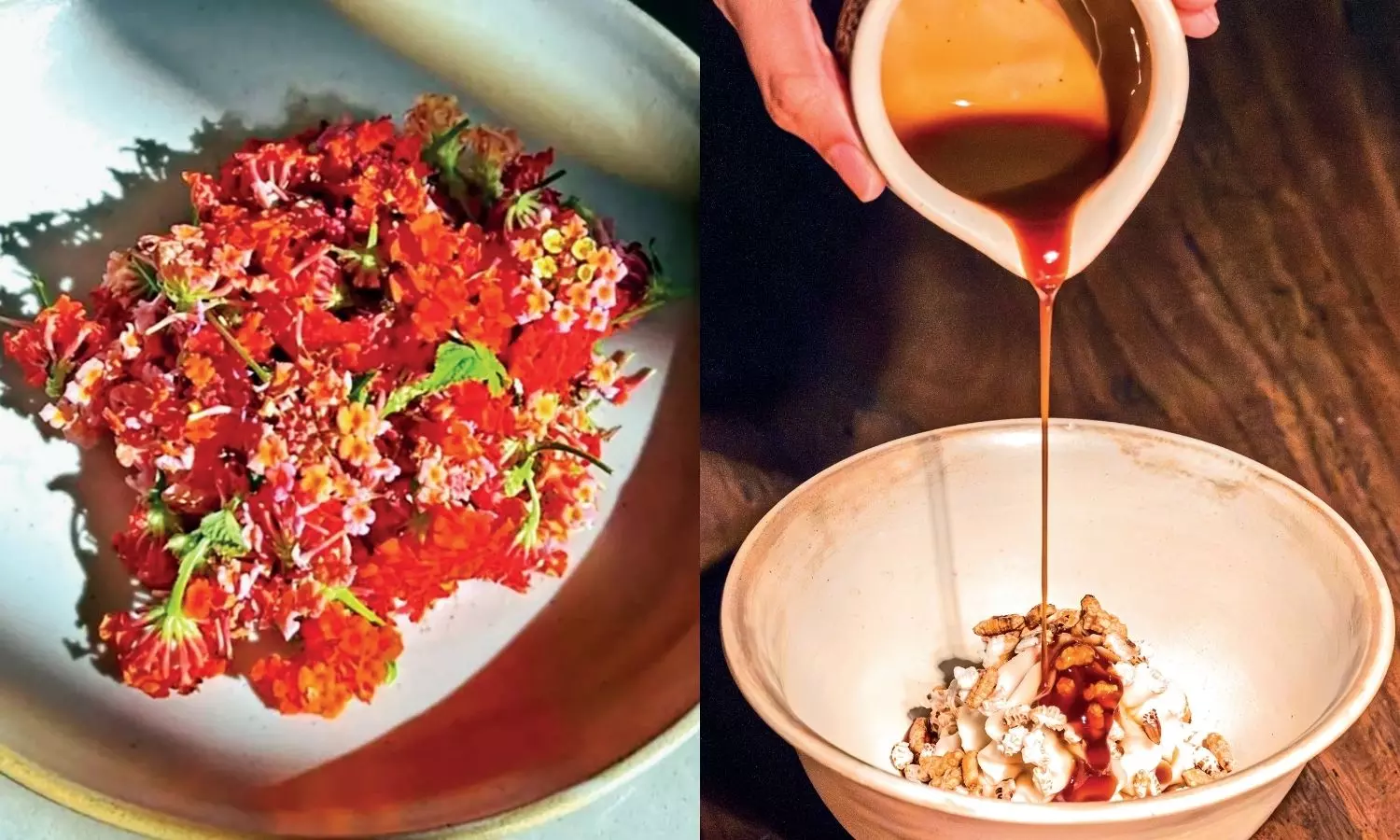
Chef Michelle Arcelina Paes, Head Chef at Ekaa, Mumbai, brings a nuanced, dessert-led perspective to farm-to-table. “Infusion is one of my core approaches to seasonality”, she says. Her focus lies in extracting the true essence of an ingredient through smell, taste, and texture. She mentions working with the invasive, poisonous lantana flowers for their delicate floral quality or red weaver ants for their sharp citric acidity. “Sometimes the most unusual ingredients are simply the ones we’ve ignored or haven’t yet understood,” she opines. At Ekaa, where the kitchen is entirely ingredient-driven, even a tomato demands respect. Indigenous ingredients require recalibration as they do not behave predictably, they force humility, restraint, and understanding. For them, developing strong relationships with vendors at Sassoon Dock, Bhuleshwar and Dadar markets is integral to getting access to the freshest and most unusual seasonal produce that sparks creativity.
From Farm to the Pantry
Farm-to-table is no longer confined to restaurant menus. It is reshaping India’s D2C food brands, where direct sourcing is both philosophy and operational strategy. At Kaaram OK Please, ingredients such as specific chilli varietals, spices, and kodampuli (a Malabar tamarind also known as gambodge) are sourced directly from growers, while spinach for one hot sauce is procured from Parna Farms, an urban hydroponic farm in Coimbatore, to reduce transit time and post-harvest loss. Preservation techniques like salting, fermenting and brining quietly stabilise seasonality batch to batch, forming the unseen backbone of the product.
With India losing an estimated 20 to 30 per cent of fruits and vegetables due to fragmented cold chains and long transport routes, the definition of a “farm” is expanding: from large agricultural holdings to smallholder cooperatives and controlled-environment urban hydroponic systems. Shorter supply chains improve quality control, stabilise supply and enhance traceability.
Farm-to-table in India is not just a romantic return to the soil. It is an evolving hybrid — part farmer’s network, part market rapport, part urban innovation, part forest foraging. At its core, it is about proximity: to the land, sea, and, importantly, to the grower. In embracing that uncertainty, chefs are not just changing menus; they are reshaping how we think about food itself.


Akhila Vijayaraghavan
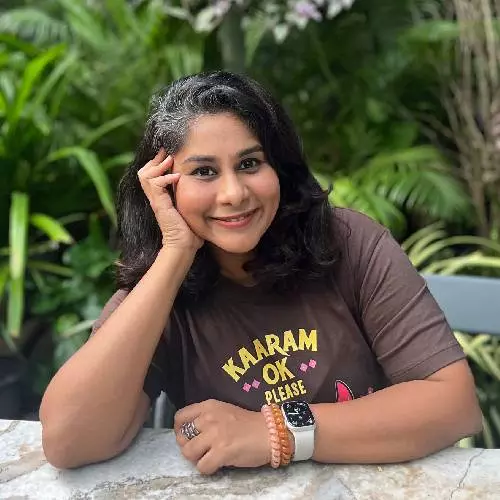
A molecular biologist turned urban farmer, Akhila Vijayaraghavan is the founder of Parna Farms and the creator of Larder by Parna Farms and Kaaram OK Please. Her work explores regional ingredients, fermentation, and the stories that shape India’s diverse food traditions.