
Salt, Smoke & Winter!
In this personal winter food chronicle, let's trace how seasonal Indian dishes—from mustard greens to coastal stews—shaped our palate, memory, and understanding of time


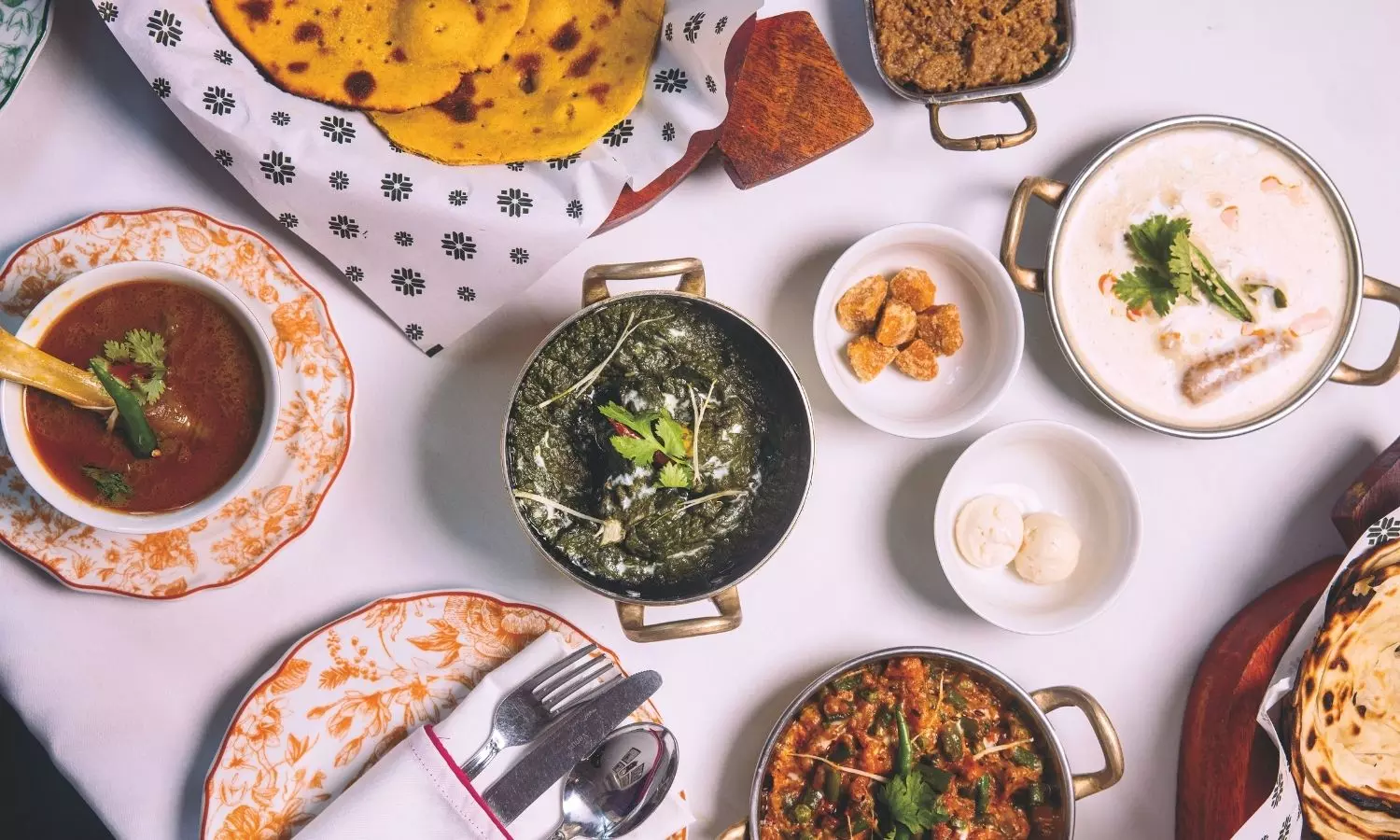
I have long felt that winter is when Indian food speaks most clearly. Not louder, not richer necessarily—but with intention. Across years of travel, reporting and simply eating with curiosity, I’ve learnt that winter dishes are never accidental. They are built on foresight, preservation, climate wisdom and an intimate understanding of the body. Winter in India may not look the same everywhere, but it tastes unmistakably deliberate.
Some of my earliest food memories are tethered to winter appearing quietly. There was no dramatic drop in temperature, just the arrival of certain ingredients. Greens thickened, grains changed, sweets grew heavier. The kitchen adjusted before we did. As a child, I didn’t know why gond ke laddoos (made from warming edible tree gums like acacia, almond and tragacanth) appeared, or why certain vegetables suddenly mattered. As an editor today, I understand that winter cooking is one of India’s oldest systems of applied food knowledge—deeply regional, fiercely seasonal, and rooted in survival as much as pleasure.
Northern Fires and Fields of Green
At the heart of this story—and fittingly on our cover—is sarson da saag with its most trusted companion, makke di roti. Together, they represent winter cooking at its most elemental and assured. A dish built on time, repetition and instinct, sarson da saag speaks of patience and generosity—mustard greens cooked down slowly, flavours deepened deliberately, bitterness softened through care. Finished with white butter and eaten hot with makke di roti, it insists on rhythm. You cannot hurry it, and it will not appear out of season. This is cooking governed by daylight, temperature and instinct—where the meal waits until the season is ready. Carrots, too, wait for winter to reveal themselves. Gajar ka halwa made from tender red carrots is an exercise in slow indulgence. Milk reduces, sugar deepens, and ghee carries aroma. A lesser-known detail: this halwa was once considered a strengthening food, often eaten warm in small portions rather than as a dessert.
Further west, Gujarat’s undhiyu celebrates winter abundance. Cooked traditionally in earthen pots, vegetables layered rather than stirred, it mirrors the agricultural calendar. Fresh tuvar, green garlic, yam and fenugreek dumplings come together in a dish that is eaten outdoors as often as indoors—proof that winter in much of India is as social as it is seasonal.
Did You Know?
Many winter dishes were designed to be cooked once and eaten over several days—an early lesson in efficiency and flavour development.
Desert Wisdom
Rajasthan, where my mother grew up, taught me early on that winter food doesn’t require abundance—it requires intelligence. Ker sangri, made from dried desert berries (ker) and beans (sangri), is not merely a dish but a culinary philosophy. Harvested in the arid months, sun-dried, stored and rehydrated in winter, it is seasoned with restraint yet confidence—yoghurt, dried chillies, cumin, a touch of amchur. No excess, no garnish. Just the flavour extracted through the technique. What makes ker sangri remarkable is its defiance of the environment. In a land where fresh produce is unreliable, preservation becomes power. Winter is when these stores are honoured. I have eaten ker sangri in modest homes and heritage hotels, each version tasting slightly different, yet always unmistakably Rajasthani—salty, sharp, deeply savoury. It is a dish that doesn’t apologise for its austerity, and perhaps that is why it feels so modern today.
Western Coasts and Stored Abundance
If Rajasthan’s winter food is about survival, the western coast’s is about timing. In Goa and the Konkan, winter arrives with a certain confidence. Dishes like chicken cafreal and the pork and beans stew feijoada take centre stage, not because they are heavy, but because the season allows them to mature.
Cafreal, in particular, holds my attention for the history it carries as much as the flavour it delivers. Green with coriander, garlic and spice, it is a dish that speaks of movement across oceans. Its roots lie in Mozambique, carried to Goa through the shared routes of the Portuguese empire, where it found a second home and a local accent. What fascinates me is how seamlessly it adapted—fiery yet herbaceous, familiar yet foreign. Cafreal is not just a recipe but a reminder that winter food in Goa is often layered with memory, migration and colonial exchange, where two distant kitchens continue to speak the same language of spice and heat. Maharashtra’s winters are gentler but no less intentional. Valache birde, made from hyacinth beans available only briefly, is a reminder that seasonality doesn’t always announce itself loudly. Bhutte ka kees, grated corn cooked with milk and tempered simply, appears and disappears with the cold. Miss it once, and you wait another year. Breakfasts change, too. Poha with jalebi, eaten steaming hot, makes sense only when mornings are crisp. Ukdiche modak, steamed rather than fried, offer warmth without heaviness—coconut and jaggery providing comfort rather than excess.
Across these regions, winter cooking reveals a shared understanding: that food must respond to both climate and calendar. Stored ingredients, preserved techniques, delayed gratification—these are not trends, but inherited wisdom.
Winter Pantry Across India
Dried berries and beans, mustard greens, red carrots, sesame, jaggery, millets, peppercorns, and edible gum.
Gentle Heat of the South
Winter in the south is often misunderstood as negligible. Yet its food tells a quieter, more nuanced story. Here, warmth is built through spice, grain and texture rather than fat. Ragi mudde exemplifies this. Dense, grounding, deeply nourishing, it is winter food not because of temperature alone, but because bodies crave stability. Pepper-forward gravies accompany it, delivering heat that warms from within.
Pepper dominates many southern winter dishes. Milagu kuzhambu and kozhi rasam rely on their sharp, lingering warmth. These are foods that blur the line between nourishment and remedy, eaten as much for prevention as for pleasure. Ellu sadam—sesame rice—appears around winter harvests, its nutty richness aligning with cooler days. In Kerala, kappa puzhukku offers comfort through simplicity. Tapioca, once a famine food, becomes deeply satisfying when mashed with coconut and spice, especially when evenings turn breezy.
Winter food, I’ve learnt, is India’s quiet teacher. It asks us to slow down, to store, to trust time and instinct. Long after the season passes, these dishes linger—proof that the most enduring flavours are born not of abundance, but of attention.
Winter Warmers Across India
These winter drinks lean towards nourishment over novelty:
- Kaanji- Fermented black carrot drink with mustard; warming and probiotic.
- Sattu Sharbat- Roasted gram flour mixed with water, lemon and spices; deeply nourishing.
- Masala Doodh- Hot milk flavoured with nuts, saffron and warming spices.
- Ragi Malt- Finger millet drink, lightly sweet or savoury, sustaining in cold months.P
- Badam Milk - Almond-rich hot milk popular across Western India.
- Ginger–Jaggery Water- Simple, restorative and commonly sipped in the mornings.
- Panakam (winter version): Jaggery, ginger and pepper drink adapted for cooler weather.



Raul Dias
An award-winning food, travel and luxury writer, editor and columnist, Raul has over two decades of experience across India’s leading newspapers and magazines. Currently the Editor of Fresh, a food and lifestyle magazine, he lends a refined editorial voice to India's ever-evolving food and lifestyle landscape.