
Sehri Before Sunrise
In this reflective exploration of Hyderabad’s pre-dawn food culture, Chef Sadaf Hussain traces how sehri has evolved from a quiet domestic ritual into a shared urban experience.


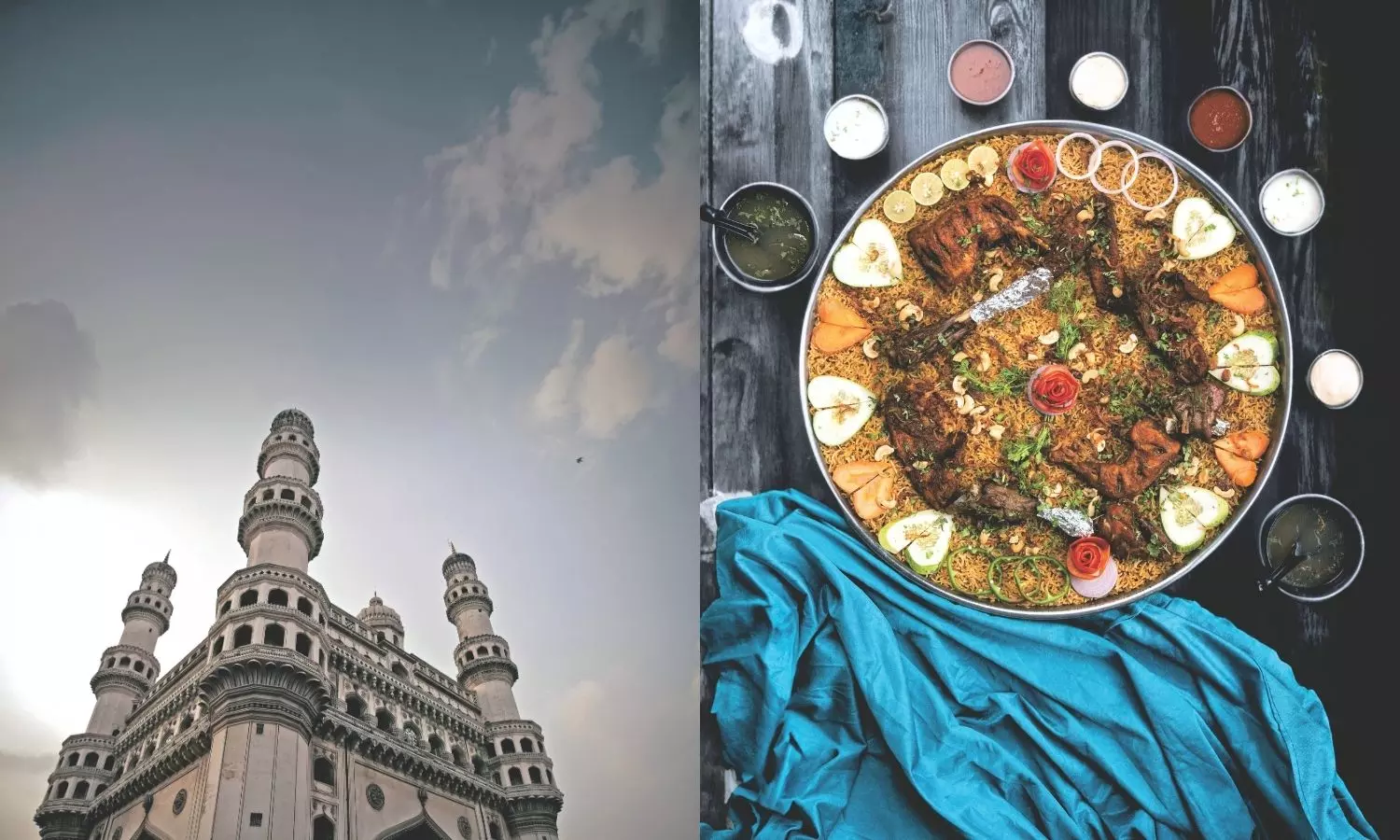
Sehri, the pre-dawn meal during Ramazan, has evolved into a grand culinary affair in Hyderabad. Once a quiet family routine, it is now a vibrant, sleepless food carnival that grips the city’s nights.
During Ramazan, Hyderabad is busy from iftar till sehri, from 7 p.m. to 4.30 a.m., coming alive with crowded food stalls, chatter, and clattering pots under the iconic Charminar and beyond. It’s not just Muslims—Hyderabadis of all backgrounds venture out at midnight, blurring religious divides as they break bread together under starry skies.
Yet, unlike iftar, which celebrates abundance, sehri has always been about endurance.
Food for Endurance
Across Muslim households, the logic of sehri food was simple: it had to sit gently in the stomach, digest slowly, hydrate the body, and sustain energy through a long day of fasting. This philosophy shaped what appeared on the table.
One of the most beloved traditional sehri spreads in Hyderabadi homes is the trio of khichdi, khatta, and kheema. Khichdi in this context is a buttery rice-and-lentil preparation, often on the drier side, that serves as a comforting, energy-rich base. To a North Indian palate, a dry khichdi for breakfast might seem odd, but in Hyderabad, it is a morning staple with deep roots. The 14th-century traveller Ibn Battuta observed locals eating rice boiled with lentils and butter called kishri for breakfast—an early reference to khichdi’s long history in the region.
Hyderabadi khichdi is distinguished by its sour accompaniment, khatta. This is a tangy sauce or chutney made using tamarind, sesame seeds, peanuts, and other regional ingredients, rather than a curd-based kadhi. It reflects the city’s fondness for sharp, acidic flavours. Til ka khatta, a popular version, blends sesame and peanuts with tamarind to give mild khichdi a spicy edge. The third element, kheema— spiced minced meat, usually mutton or beef cooked with onions and gentle spices— rounds off the trio with protein and satiety, making it a balanced meal.
Sweet Endings in Hyderabad
- Double ka Meetha: Bread slow-cooked in milk, sugar, and ghee, finished with nuts. A Ramazan classic that turns leftovers into indulgence.
- Qubani ka Meetha: Stewed dried apricots with a tart-sweet depth, traditionally paired with custard or thick cream.
- Badam ki Jali: Delicate almond fudge set and cut into diamond shapes— soft, rich, and unmistakably royal.
- Sheer Qorma: Vermicelli simmered in milk with dates, nuts, and rose— served warm or chilled at the close of Ramazan meals.
- Ande ka Pitha: A rare old-city dessert made with eggs, milk, and sugar, steamed gently into a custard- like cake.
From Home to Street
Traditionally, families woke before dawn to prepare sehri at home. Many Hyderabadis still consider khichdi-khatta- kheema the ultimate comfort sehri—filling yet gentle on the stomach. Until fairly recently, these dishes were rarely found in restaurants at night; they were considered home food.
With changing Ramazan rhythms, eateries have begun serving khichdi-khatta- kheema during sehri hours, giving people a chance to taste what once belonged only to family kitchens. As one food historian notes, earlier sehri was largely about khichdi, khatta, and kheema—unpretentious and restrained. Today, this trio remains the soul of Hyderabadi sehri, connecting people to inherited tastes even amid the city’s midnight bustle.
Muslim societies—from harees in the Arabian Peninsula to milk-and-bread breakfasts in parts of Turkey, from roti-shakkar in Sindh to plain rice porridges in Central Asia. Hyderabad’s sehri belongs to this larger Islamic food ecology: soft textures, warm temperatures, fats for satiety, protein for strength, and minimal spice.
Did You Know?
Khichdi-khatta-kheema is one of the few Indian meals traditionally eaten both for breakfast and dinner, depending on the season and occasion.
Inheritance and Evolution
What has changed over the last two decades is where sehri is eaten. The old city stays awake. Eateries and cafés remain open. With this shift, many dishes not traditionally meant for sehri have become part of Hyderabad’s pre-dawn eating culture.
Among them are paya, a slow-cooked trotters’ broth rich with gelatin and spice; bheja, soft and buttery; gurda, sautéed and peppered; and simple tala hua gosht—pan- fried meat cooked with minimal masala. These foods share a common logic: high protein, high fat, and deep satiety.
Another dish finding its way into sehri menus is dalcha with zeera rice, a lentil-and- meat stew paired with cumin rice. Lentils offer slow-release energy; rice brings familiarity. It makes nutritional sense, even if it did not historically belong to sehri.
This distinction matters. There is a difference between traditional household sehri and urban sehri culture. The first is shaped by repetition, and restraint; the second by mobility, choice, and appetite. Both now coexist.
A young Hyderabadi may eat khichdi-khatta at home one morning and drive to the old city for bheja and paya the next. Neither is inauthentic. One represents inheritance; the other, evolution.
Hyderabad has always absorbed and adapted. Many food influences coexist on the same dastarkhwan. Sehri, more than iftar, reveals this layering clearly. Without the distraction of festive excess, the logic of sustenance becomes visible.
If iftar today is about grand feasts, sehri remains quieter, calmer, and underrepresented—but deeply functional. It is a steady act of nourishment for those who observe the fast through the long month of Ramazan.
Sehri Logic
Classic sehri foods across the Islamic world follow the same principles: slow digestion, gentle spice, fat for satiety, and warmth for comfort.


Sadaf Hussain
Sadaf Hussain is a MasterChef India 2016 finalist, TedX speaker and food and travel enthusiast. When he's not cooking delicious dishes for IFN Hindi, he blogs at www.foodandstreets.com.