
The Lucknowi Dastarkhwan
In Lucknow, Ramzan unfolds with quiet grace, where sehri and iftar are shared rituals of home and street.


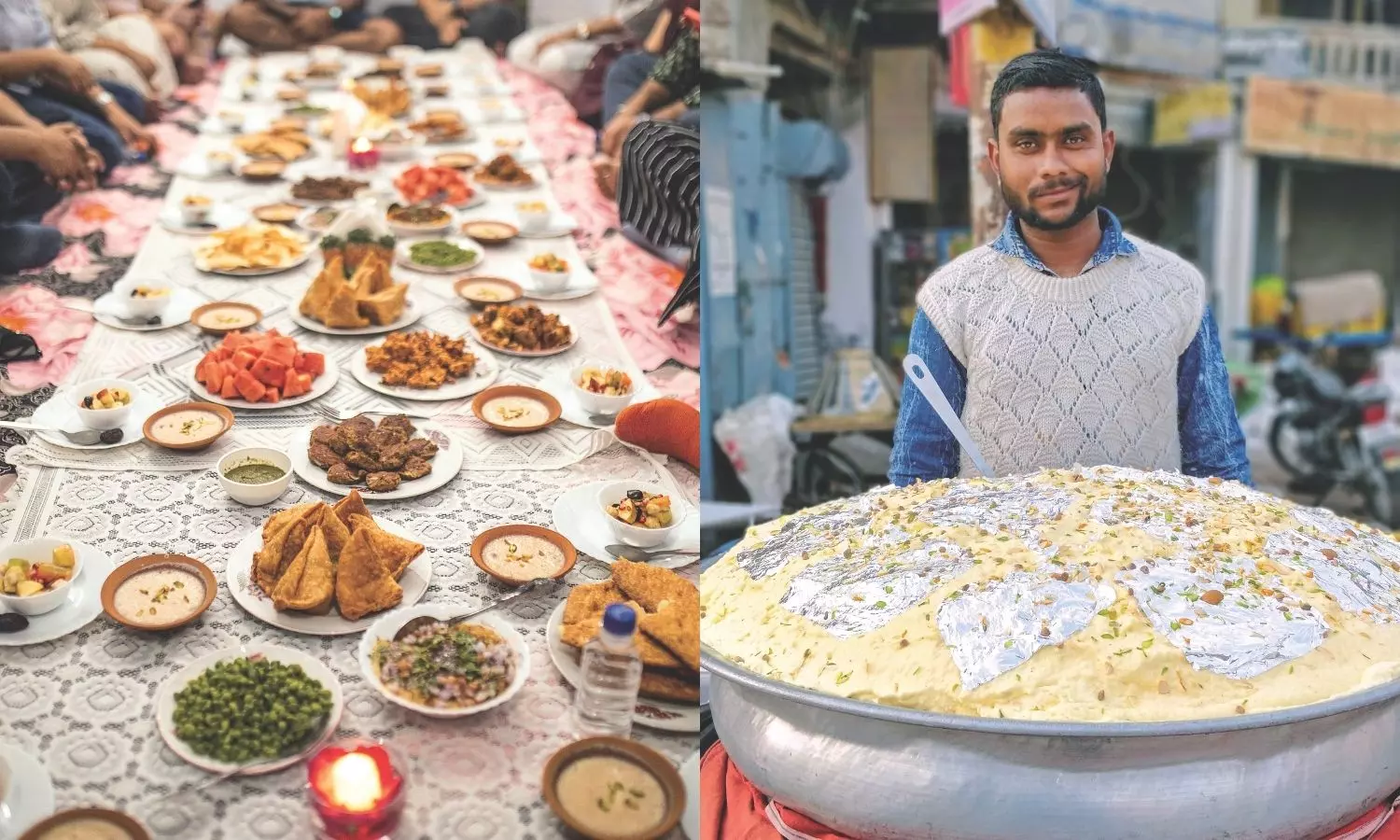
If you find yourself in Lucknow during Ramzan, the most authentic way to experience its traditions is through sohoor, or sehri (the pre-dawn meal), and iftar (the meal that breaks the fast). The most local advice? Get yourself invited home. For everyone else, the streets come alive at dusk, serving Ramzan specials relished by residents and visitors alike.
Where Ramzan Begins: Home
Taqi Abbas, a cultural storyteller, explains that Ramzan in Lucknow has always begun at home. “Earlier, select members of the community would walk through neighbourhoods before dawn, beating drums to wake people for sehri,” he says. “Now, we have loudspeakers.”
Sehri foods are seasonal— methi khichdi, sitara and doodh laccha made with sevaiya. Lucknow’s breakfast table also carries traces of British influence, with boiled eggs, sunny-side-up omelettes, jam-butter toast, and occasionally biryani. Life once followed an early-to- bed rhythm, with Eid night being the city’s brightest exception. “Now people stay up all night,” Abbas smiles. “Culture evolves.”
When it is time for iftar, generosity travels easily. “Even if you haven’t cooked, something will reach you,” Abbas jokes. The table begins with papads, fryums, dates, chane ki dal and cooling drinks such as khus sharbat and Rooh Afza. In winter, dum ki chai or Kashmiri kahwa makes an appearance.
Iftar unfolds in two parts. The fast is first broken with fruits, nuts and sharbat, followed by prayer. Only then does the second round begin—a celebratory spread that leans into indulgence.
Where Lucknow Eats
The city has a long list of spots that offer Ramadan delicacies. At the various bazaars, Mughlai options trend: Aminabad (Alamgir Hotel, Tunday Kebabs), Akbarigate (for Idrees ki Biryani, Mubeen’s for nihari kulche and Mughlai, Raheem’s for kulche nahari), Hussainabad (nawabi chaska and handi nihari). A local tip is to try Ache Bhai at Raja Bazar for girde kulcha and nahari.
Left to Right: Mubeen’s kulche-nihari; bun-butter-samosa at Sharma Ji
Vegetarian Tables, Shared Joy
Delhi-based journalist and cultural consultant Anubhuti Krishna, who traces her roots to Lucknow, began hosting Lucknow With Anubhuti—two-day cultural immersions—after years of returning to the city. “I grew up vegetarian and was always well fed at Eid,” she recalls. “From chole bhature and sabzi puri to pulaos and mithai.”
In Muslim homes, she explains, sehri is often light on meat, while iftar includes generous vegetarian dishes—kheer samosa, sevai, aloo samosa. A distinctly Lucknowi speciality is a dry chana dal cooked in mustard oil, replaced by dry peas in winter.
Many Kitchens, One Table
Chef and food writer Taiyaba Ali, who grew up in a joint family in Lucknow, recalls Ramzan as a season of abundance shaped by community living. “We had three kitchens—my nani, mami and mother cooked separately—but everyone ate together. Something came from each kitchen.”
Sehri was a childhood excitement. Though the children didn’t fast, they waited for khageena—an anda paratha made with onions, ginger and green chillies, sautéed in ghee and finished with scrambled eggs. Another favourite was lacche or soot pheni, dipped in hot milk and eaten like cereal.
Nihari was strictly a breakfast dish, paired with kulche. “One of the men would bring it home in a large steel container,” she laughs. “But if you were fasting, you couldn’t eat too much—it made you thirsty all day.”
At iftar, dates and fruit were essential. Pakoras varied by household—egg in affluent homes, onion or plain elsewhere. In summer, fruit salads included rasbhari, or cape gooseberry.
The galouti kebab was made for a toothless nawab, Asaf-ud-Daula. Since they melted in the mouth, he could savour his love for kebabs.
Tunday Kebab in Aminabad gets its name from the owner, who had just one working arm (which is tunday in Hindi!).
Grace Over Grandeur
Chef Mukhtar Qureshi, who studied home cooking traditions while building Waarsa at the NCPA in Mumbai, describes Lucknow’s Ramzan as rooted in balance. “This is the food of the people,” he says. “Iftar here values grace over excess, sharing before self, and calm over spectacle.”
Flavours remain subtle, preparations slow. Nihari, haleem, kulche and kebabs dominate, while neighbourhoods such as Aminabad, Nakhas Chowk and the lanes around Bara Imambara transform into vibrant iftar hubs. Haleem and shawarma—newer arrivals—sit alongside Awadhi classics, embraced without erasing tradition.


Phorum Pandya
This independent journalist and food writer swapped her full-time job for the “reckless life of a freelancer!” Terrible at crossing roads, she loves to chase a juicy story across the globe. She has a thing for quirky headlines, airport transits, quaint cafés, and catching the sunrise.