
Intentional, Impactful, In-Charge: Women Leading With Heart and Strategy
This International Women’s Day, find out how intention-led leadership is transforming Indian food and beverage through wellness, experimentation, and regional pride.


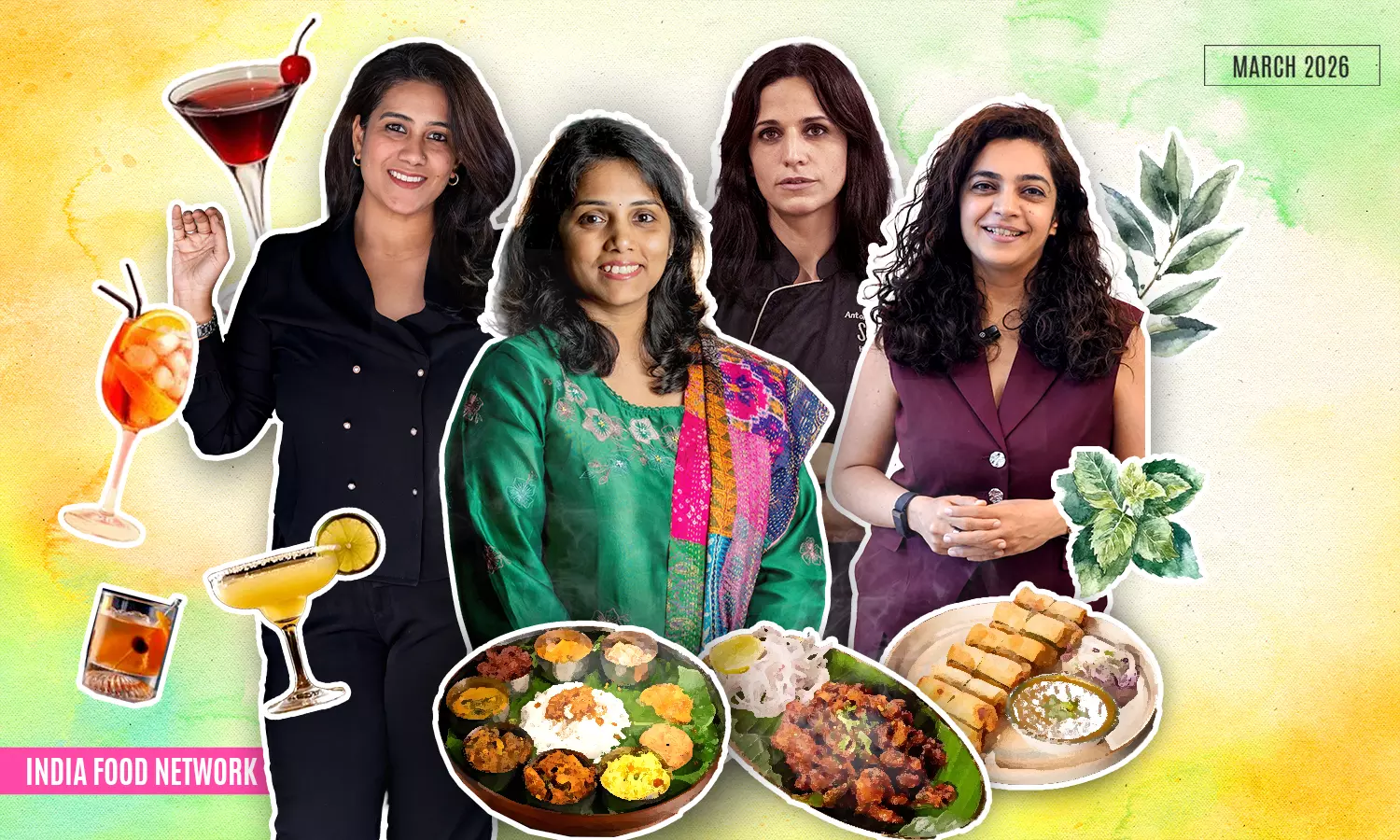
Success in the food and beverage industry is no longer just about customer numbers, investment, or online attention. Now, it is defined by purpose, empathy, and lasting impact. Across India, women are changing hospitality by creating places that nourish, challenge, and connect people, all while focusing on strategy and substance.
Leadership takes many forms- from a quiet bar in Hyderabad that doubles as a creative space to a Mumbai café that mixes medical science with comfort food, and a restaurant dedicated to preserving Telugu food traditions. Honey Guha, Neha K Motwani, Antonia Achache, and Pranavi Chekuri are leading this change. Through Oxymorons, The Fertility Table by Luma Fertility and Kitchen Garden by Suzette, and Bhojanam, they show that when women lead with both heart and strategy, hospitality can inspire care, creativity, and cultural change.
Honey Guha
(Co-Founder, Oxymorons)
For Honey Guha, leadership in hospitality has never been predictable. Her path from fashion to HR and then to food and beverage shaped both her outlook and Oxymorons’ unique identity. “My journey wasn’t linear or textbook hospitality. But those different worlds didn’t collide; they bloomed into each other,” she says.
Oxymorons’ philosophy reflects Honey’s varied experience. The space avoids excess, noise, and formulaic nightlife, instead focusing on intimacy, clarity, and precision. For Honey, experimentation is driven by curiosity and strong systems, not shock value. “Authenticity isn’t rebellion. Its alignment,” she explains.
In an industry often led by visible, masculine styles, Honey took a different path. She focused on structure, emotional intelligence, and long-term planning. Rather than seeking approval, she started sharing her journey online, offering insights on operations, entrepreneurship, and bar culture. Over time, her consistency became her greatest strength. She believes identity is built slowly, and authority comes naturally. Her vision is the idea of psychological safety. Women-led spaces, she feels, redefine power in hospitality. They create environments where guests feel comfortable ordering freely, teams feel safe to experiment, and conversations move beyond consumption into community.
Looking ahead, Honey wants Oxymorons to become even more of a place for new ideas. She focuses on structured experiments, data-driven menu development, and working with other industries. Her goal is not to grow bigger, but to become sharper. “The future for us isn’t bigger. It’s sharper,” she says. She wants Oxymorons to be more intentional, thoughtful, and in tune with where Indian bar culture is going.
Pranavi Chekuri
(Founder, Bhojanam)
At Bhojanam, Pranavi Chekuri is quietly challenging the way Telugu cuisine is understood and represented. Rather than flattening it into a generic “South Indian” category, she structures her menu around Krishna, Godavari, Rayalaseema, and Telangana, highlighting each region’s distinct flavours, ingredients, and rhythms.
For Pranavi, her approach is about bringing back the details that make Telugu cuisine special. Each thali is a cultural journey, using traditional methods but presented in a modern way. The flavours stay true, but the look and timing are updated for today’s diners. She wants comfort food to feel fresh without losing its essence. When both younger, visually focused diners and older generations enjoy the food, she knows she has found the right balance.
Preserving heritaKeeping heritage alive while growing the business takes discipline. Bhojanam records its main recipes, standardises ingredient sourcing and preparation, and carefully trains its teams. Pranavi believes growth should make things clearer, not weaker. Authenticity needs to be systematic if it is to last beyond one kitchen.is deeply personal. Growing up in a large family where recipes lived in memory rather than notebooks, she witnessed how women transmitted culture through repetition and care. “Food carries identity, resilience, and quiet leadership,” she reflects.
With Bhojanam, Pranavi wants to bring Telugu cuisine to a national audience and show that the cooking knowledge women have passed down has both cultural and business value. She is proving that preserving tradition, when done thoughtfully, can be a strong form of modern entrepreneurship.
Neha K Motwani and Antonia Achache
(Founder, Luma Fertility | Co-Founder, Kitchen Garden by Suzette)
For Neha Motwani and Antonia Achache, their work on The Fertility Table started with a shared belief: women should feel informed, supported, and empowered in their health journeys, without feeling overwhelmed or treated only as patients.
Neha’s work at Luma Fertility is grounded in transparency and in giving women control. She believes women today want to be active in their healthcare. “We focus on conversations, not just treatment plans,” she says. By explaining science clearly and welcoming questions, Luma helps women replace fear with informed choices. For Neha, fertility is less intimidating when women understand their own bodies.
She realised that food was a natural part of this philosophy. Fertility is not just about clinics; daily habits, especially nutrition, matter a lot. Working with Kitchen Garden made sense because of its focus on mindful, nourishing food. Their goal was to bring science into everyday places, so eating for fertility would feel comforting, not clinical.
For Antonia, this partnership confirmed the values she has held since starting Kitchen Garden. “Food has always been a quiet form of self-care for me,” she says. The café has always avoided fad diets and extremes, choosing instead to focus on simple, organic, whole ingredients. She believes real empowerment comes from consistency, not quick fixes.
Working with Luma supported this philosophy. It made Kitchen Garden even more committed to organic sourcing, transparency, and building long-term partnerships with farmers. Their work with Offerings Farm, which grows produce just for the restaurants, shows their strong sense of responsibility to both people and the environment.
As an entrepreneur, Antonia has focused on growing thoughtfully instead of just getting bigger. Her business is built on community, traceability, and trust. “When you lead with care, growth happens naturally,” she says.
Neha and Antonia hope The Fertility Table will help women think about hormonal health and nutrition earlier and with more confidence. They want their impact to be gentle but lasting. As Neha says, “Sometimes it’s just about helping women feel a little more informed, a little more in control, and a little less alone.”
By turning everyday meals into ways to build awareness and wellbeing, their partnership shows how healthcare and hospitality can work together to create real, people-focused change.



Shreya Mukherjee
Shreya loves a good Harry Potter conversation when she is not busy figuring out the best toppings for Ramen. An avid reader who enjoys all forms of story-telling, you will find her either reading or binge-watching shows. She also loves spending her weekends taking care of her skin while figuring out which restaurant to get a take-out from.